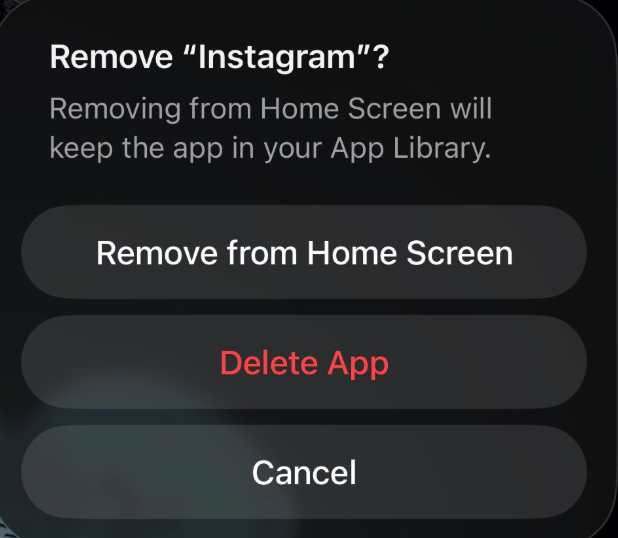
Instagram. Snapchat. TikTok.
I hear about these apps at least a 100 times a day. One of my friends tells another about some Reel he saw. A girl walking in the hallway talks to her group about some TikToker with a million followers. My mom checks her screen time and criticizes how much we’re all on our phones to my dad, who’s scrolling National Geographic Shorts at full volume.
Social media is basically life these days. Having followers tells the world that you actually exist, and posting every single second of your day elevates your status as a trustworthy icon for the masses. However, if that is the main method of maintaining a reputation among younger generations these days, how come so many people are leaving those platforms?
If being online is life, then why are they settling for a life offline?
The Fall-Off Is Inevitable
In 2016, the Chinese social media company Douyin launched its first overseas expansion, in the name of “TikTok.” The app’s purpose was simple: record a video less than a minute long and post it online for everyone to see. And almost overnight, the app blew up. Celebrities made accounts and started posting, people would do a short dance routine and it would go viral, and influencers would make thousands off promoting products on the platform. It seemed like one of the biggest successes ever for a social media company; maybe the euphoria would never end.
Ten years have passed.
The euphoria died long back.
The same fun people had when TikTok first became popular has since passed away, with the app morphing into an almost-wasteland full of AI-generated slop, money-hungry influencers, and little room for actual creative content. In fact, the Oxford University Press named “brain rot” its 2024 word of the year, with “rizz” taking the title a year prior — both of which originated on or in relation to TikTok.
When one of the oldest universities in the world is also following the hype, that’s when you know it’s important.
Despite the fact that social media content heavily influences the real world, the main reason why people started leaving it was because of how it affected them personally.
In a survey by The New York Post, 63% of Gen-Z social media users wish to go offline. This includes the obvious apps like TikTok, Instagram, and Snapchat, but it also includes platforms like X and Facebook. In an interview with Newsweek, Kate Cassidy Fletcher, a former professional who worked for TikTok’s monetization sector during the pandemic, described how her experiences led her to completely ditch the company and all social media apps akin to it.
“A statistic we would use in our sales pitch to advertisers was that the average daily time spent was 92 minutes a day scrolling TikTok videos,” Fletcher said. “That is over an hour and a half of constant dopamine hits from the second you open the app.”
Here’s a better picture: if you scrolled that much everyday for a year, you’d lose 547.5 hours just for those dopamine hits. That’s almost 3 weeks worth of nonstop scrolling.
And that’s just an average estimate.
Why It Fries Your Brain
Every time you do something you like, your brain releases dopamine, its “feel-good” chemical to balance your hormones. Now here’s how it’s supposed to work: let’s say you like to read books. Every time you read, your brain releases more and more dopamine, slowly increasing until it reaches a peak. That’s usually when you feel you’re done reading, so afterwards it decreases back to zero.
But with social media, it’s much different. Since it requires a reduced amount of effort than reading, your brain releases more dopamine than normal. If you keep scrolling, the dopamine levels rapidly shoot up, and they spike to a maximum higher than before. But once you’re done, it doesn’t go back to the baseline. It instead crashes immediately and goes to the negative.
This is why scrolling makes you feel unmotivated and foggy: your brain just got the dopamine equivalent of reading 10 books, but only through 100 Reels.
We can’t forget adaptation, though. To prevent you from spiking intensely, the brain rewires the dopamine baseline to be higher with every scroll. Soon, three hours on Shorts feels like the best entertainment ever. But if that increases, then what is lost?
Well, it’s simple: your life.
Things that are offline and in-person feel boring, and this disdain grows with the more you scroll. And once you tumble down the rabbit hole, that’s it.
Touching grass: difficult. Talking to someone: uncomfortable. Deleting the app: impossible.
The IRL Movement
To prevent this fate from occurring, Gen-Z users are now finding alternatives to have real “feel-good” experiences. The first step is non-negotiable, however: leave your socials. Delete the accounts, unfollow your friends, and clear all stimulation.
From there, it’s a free-for-all.
There are numerous paths users follow: an example would be embarking on a “dopamine detox.” Now, dopamine is a necessary chemical for cognitive function and mental health, so “detoxing” it would technically be impossible. But despite the misleading name, its intentions are beneficial. What users do is lock their phone away somewhere, stop all entertainment, and instead spend a period of time living life “boring” on purpose.
Another example would be the “dumb phone,” a form of telecommunication where all stimulation is removed. Purely for texting and calling, this approach was more suitable for users with jobs they needed to tend to. Also, there’s time-limits, digital minimalism, journaling…we can go on for a while about how many ways people found out to be normal.
All of these methods help rapidly revert the baseline, but they also allow for introspection. Since there’s nothing to distract, users describe how they feel more connected to the outside world, allowing them to understand themselves and others better. As a side effect, their social lives greatly improved.
Most of all, the need to grab their phones withered.
My 15 Seconds Ain’t Up—I Got More To Say
All the social media platforms I mentioned reached their peak when I first got into middle school. Although all my friends hopped on and friended each other on the apps, I passed it off and preferred to stay with YouTube. That said, there was a time I fell down the rabbit hole mentioned earlier. I would spend hours blazing through Shorts nonstop. Sometimes on my phone; sometimes on my laptop; I even remember scrolling on my TV at one point. Eventually I hit rock bottom, and I got a massive epiphany:
“If I keep going on like this, I’ll live my whole life on my phone.”
This was scary, as stuff I liked such as hip-hop, writing, and even movies became unbearable to sit through. So I made myself a promise; for as long as possible, I would hop off my phone and live life the real way.
That went on for two days.
Motivation is short-lived, so I entered the cycle of scrolling with elation, suffering from overstimulation, deleting the app with determination, and relapsing with humiliation. To be honest, I still give in to the inner voice occasionally and scroll, but now I’m more wise about myself and the Internet. As such, I’ve learned to limit my screen time more and just enjoy being in the moment.
It’s fun at the beginning to be surrounded by so much content, but the algorithmic model is very overwhelming. It reaches the point that the stuff you liked at first is incomparable to what you like now. This is why the whole “offline” movement started, and why Gen-Z hates its greatest invention:
Will you let the phone control you, or are you strong enough to control the phone?
Sources:
https://www.newsweek.com/gen-z-millennials-leave-social-media-offline-internet-2047044