Introducing the shiny new toy that everyone is attached to—and no, it’s not a labubu.
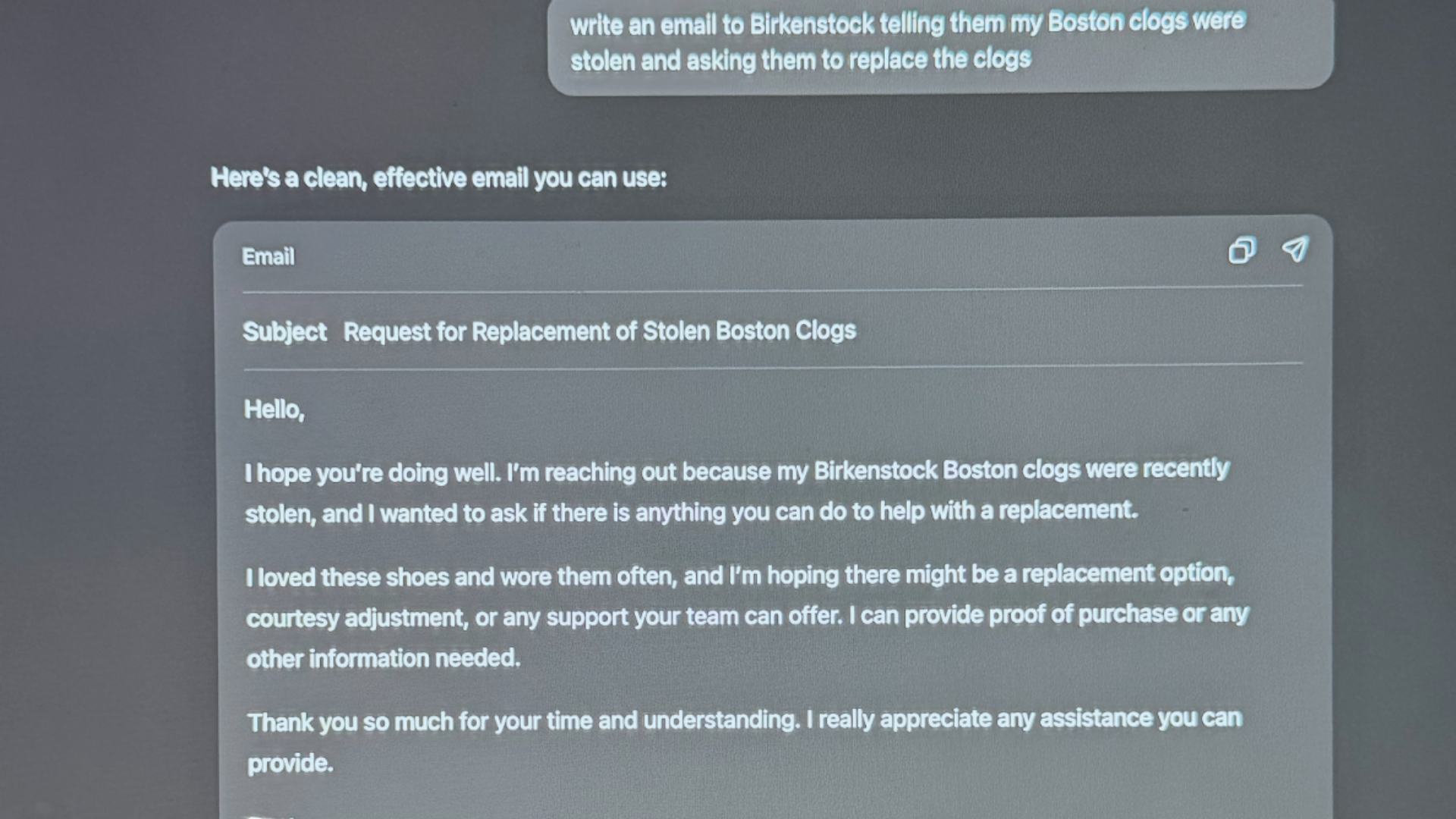
It writes essays in seconds, converses like a human, and generates images that resemble real art. This shiny new toy is in everyone’s pocket. It’s powerful and so persuasive that you might have believed it, even though it doesn’t always tell the truth.
Welcome to the world of Artificial Intelligence
User Beware: Confidence Does not Equal Accuracy
Some things are too good to be true, and that’s exactly what AI is. When a tool can do almost any task, it’s hard to spot its flaws.
For example, Mrs. Zhou, computer science teacher and FBLA adviser, said when her husband entered the same stock research prompt into multiple AI platforms, not only were the answers wrong; they also contradicted each other.
“Gemini and ChatGPT gave exactly opposite results,” said Zhou.
Chelsey Favini, an English teacher at South, attempted to use ChatGPT to find a complimentary TEDTalk for one of her lessons—only to have it recommend a work that wasn’t a TEDTalk at all.
“ChatGPT recommended a book, but presented it like it was a TEDTalk,” said Favini. “It was a resource that answered my question, but I wasted about thirty minutes searching the TED website for something that didn’t exist, all because I believed the misrepresentation.”
Both Mrs. Favini and Mrs. Zhou emphasize the importance of cross-referencing sources to verify the information provided by AI.
So why is the most powerful technology ever invented by humanity so unreliable??
The root cause of the issues with AI’s responses is the data it’s being trained with. The data may be outdated, biased, or contain errors. Lack of data on specific topics can also lead to the AI to simply guess and produce a correct “sounding” answer. AI is also not created to verify the truth; it simply predicts responses based on patterns in data, and does not check for factual accuracy.
These responses are referred to as “hallucinations,” or when AI produces information that appears to be authentic, but actually isn’t.
Even more concerning is the potential bias inherent within AI, or when it produces unfair outputs that disadvantage certain groups. “[Biased responses] tick me off because it’s a lot about girls,” said Christy McGinley, South’s Educational Technology Coach.
AI tends to associate words such as “family” and “home” with women, while men are linked to “business” and “career.” Bias is also especially prevalent in the AI hiring process, as well as AI-driven facial recognition systems.
The key take away is to cross-reference AI generated information with multiple reliable sources before accepting it as fact, rather than blindly trusting whatever it produces.
Inside the Classroom
AI certainly has its pros and cons, but it looks like its potential to improve things in education outweighs these concerns.
In recent meetings held by Forsyth County Schools (FCS), teachers have been instructed on how to incorporate AI into their lessons. Tasks that once took hours are now taking only minutes.
One example is the AI platform ClassCompanion, which has been implemented in most literature classes and many online courses as well . ClassCompanion provides instantaneous feedback on students’ written work and allegedly prevents any cheating with its AI-detection feature.
However, McGinley said the introduction of AI has also required some adjustments.
“The problem came in where some teachers were just taking that grade [assigned by ClassCompanion] and they weren’t actually going in and reading the writing,” she said.
This prompted the discussion of using AI as a tool rather than a replacement. McGinley said these tools work best when the teachers use it to assist with feedback while continuing to evaluate student’s work themselves.
Teachers are also faced with the challenge of creating new assignments that limit the improper use of AI. “Kids still have to struggle and learn and do the critical thinking, because that’s when you learn,” McGinley explained.
Despite these concerns, many teachers say they will continue to use AI in their classrooms.
How to Survive with AI 101
In today’s world, no one can predict when or how things can change, and many students are concerned about it for a completely different reason: the future job market.
AI can code, write and perform calculations, so how can we compete with that? Many say soft skills, or inherently human actions a machine cannot replicate, should be a focus of any student who wants to be a successful adult in the robots’ world.
Having logical and critical thinking skills is one way to differentiate yourself. This involves identifying problems and analyzing the responses AI is giving you, rather than accepting them as blind fact. Students must be able to question things and have good judgement without accepting the information as is.
“You need to know if AI is giving you the right answer or the wrong answer,” Zhou said.
Ethical competence is another important soft skill; it’s about making responsible decisions when using AI. This applies when considering cheating or copying AI-generated responses.
And finally, the most powerful soft skill is emotional intelligence. Although AI responds in a human-like manner, it is only presenting facts, or information that is already known, and it cannot genuinely create or replicate the depth of a human emotional connection. Skills like empathy, communication and building relationships will remain essential.
Favini provided some anecdotes illustrating how soft skills are already being prioritized in many fields, such as when her husband was conducting a recent work meeting and the topic of conversation was about how using AI to generate work-related emails was “incredibly lazy,” even “insulting.”
“[The employees] started to propose code words they would incorporate into their emails to ensure the recipient that it had been written by a person,” Favini said.
She also recalled a recent conversation with a former student now attending a prestigious university who was appalled by the professors’ usage of AI.
“For the amount of money she is paying to attend that university and to learn from those so-called experts in her field, I think it’s very insulting to be given ‘AI slop,’ instead of genuine learning experiences,” Favini said.
A Collaborator, not a Replacement
The truth is, AI won’t be leaving anytime soon. With the way the world is changing, it’s very likely that this tool will only continue to grow and expand, which is why educators say it’s essential to learn how to use it effectively.
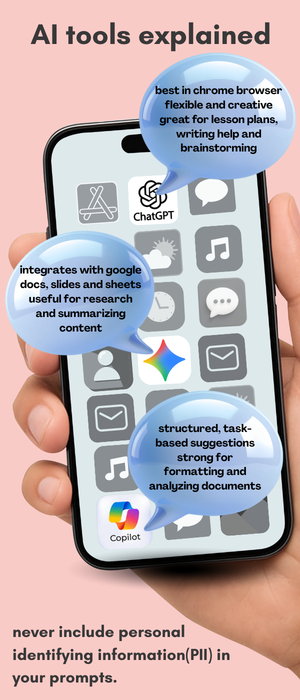
In a recent podcast episode by Smart Social, FCS Superintendent Dr. Mitch Young spoke about student and teacher use of Artificial Intelligence. “Learning to form great questions is the key to making good use of AI,” Young said.
Prompt engineering is used to describe the process of creating an instruction in order to produce better results. Creating emphasis for significant terms is one way to do this.
“Capitalize words like ‘and,’ ‘or,’ or ‘only’…it limits your searches and makes them stronger,” said McGinley.
This is formally known as using “boolean logic,” which helps to “assign a weight” to the information, making the responses it elicits more precise.
For school assignments, using AI to analyze your work according to the assignment’s rubric is a way for students to receive feedback and refine their work, as well as allowing them to notice parts of the assignment they might have forgotten or done incorrectly.
Asking AI to simplify difficult concepts is another way students can utilize this tool,
“If I’m trying to understand how to remove electrons or something, it [would provide a simplistic example] like ‘oh, well, there’s this many apples,’” and use the example to illustrate the concept, said Natalie Morton, a junior.
The key thing to understand is that students need to do assignments on their own first, then leverage AI to organize or revise ideas. This way, products sounds less like AI’s generic output, and more like “you.”
It’s a great brainstorming tool that works best as a collaborator, not a replacement.
Conclusion: Is it a Robot’s World?
What once was a shiny new technology has now become a permanent fixture in classrooms and our daily lives. But the future of AI in education will be shaped by the choices students and teachers make while using it.
We can only hope they make these choices after genuinely considering all variables, rather than blindly accepting the first response that comes to mind.