“Yo, Taylor, I’m really happy for you, I’mma let you finish.” These were the ill-advised words which came out of Kanye West’s mouth as he grabbed the mic from Taylor Swift at the MTV Video Music Awards show in 2009.
What comes next? I’m pretty sure you know. If not, search it up and you’ll find out pretty easily.
The incident was a permanent stain on West’s already rocky reputation, with his numerous outbursts and exclamations stirring controversy at random moments. This one was different though, as the entire United States was finally hating on him. The Internet viciously trashed him, musicians criticized his behavior, and executives were reconsidering their deals with him. Even President Obama called him a… you know what, search that one up too.
By this point, you can imagine Kanye’s mental state fractured–he became immensely depressed. Desperate to escape the public attention, he went into self-imposed exile in a hotel room and studio in Honolulu, Hawaii. For the next year-and-a-half he worked on music, tunes that he put his soul and genius into. What came out of that work?
An album we’ll never get to see, but that some definitely wish he had released.
The project was supposed to be the fourth addition to Kanye’s “college trilogy,” comprised of his albums “The College Dropout,” “Late Registration,” and “Graduation.” The fourth album was supposed to be the next addition, and that was his foremost aim when entering into the Hawaiian studio space. He envisioned for the LP to be the culmination of his life’s work: emotional raps, phenomenal beats, and a memorable presentation.
He quickly recruited producers that hip-hop fans deemed to be in the genre’s pantheon: RZA, Pete Rock, Madlib, Q-Tip, DJ Premier, and numerous others were invited to contribute. Each gave hours worth of material for Kanye to tweak or rap on, but it soon became perilous for the man.
He realized that he had masterpiece-level material in his hands, but his artistic vision wasn’t quite that great. Even rappers and singers like Pusha T, Mos Def, Kid Cudi, Elton John, M.I.A., and many more participated, but West just couldn’t find the switch to turn on his creativity.
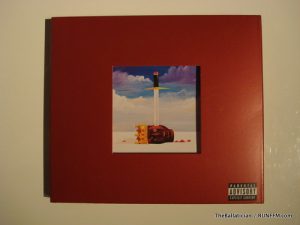
So after months of work, the fourth album was permanently laid off, but only for another album to take its spot. An album so well-produced, written, performed, and curated that many believe it to be among the greatest of all time.
That album, “My Beautiful Dark Twisted Fantasy” (2010), is what I’m gonna talk about.
This Is Amazing–Now Throw It In The “Vault”
Kanye has always been notorious not only for his behavior, but also for his scrapped material. Seriously, just search up “Unreleased Kanye” and you’ll find days worth of leaks, B-sides, and bonuses that never made the final cut for any of his albums. And these cuts weren’t so bad that they should’ve never seen the light of day; I’m talking stuff that could chart the Billboard Top 100, change people’s lives, and even propel his career further.
But, they were never formally distributed.
Yeezy’s always been known for his perfectionism–the man would spend days working on one song and bring it to its best form, but he’d remove it for one or many reasons: it didn’t match his artistic vision, the track wouldn’t fit in the album’s structure, the deadline to put it in was long past–literally anything could cause a song to be left on the cutting room floor.
As he got more famous, this drive to be exquisite only got stronger, as everyone’s eyes were on Yeezy to deliver every single time. Of course, he absolutely hit it out of the park when needed, but you could observe the increasing richness and saturation that came with his albums. By the time he got to the unreleased fourth album, Kanye was hyper-fixated on the fact that the next LP he would create would have to be his best. The album that would define who Kanye West is.
But it was this aim that made him switch gears and pursue something different altogether.
After roughly a year of studio sessions, Yeezy finally called it quits for the fourth “college” album, now focusing on a more introspective approach to his music. He drew from his various personal experiences, relationships, highs and lows, and began to focus his time on making them come alive sonically. This meant taking previously rough-around-the-edges cuts and smoothing them out to form a cohesive track list for his fifth studio album.
And on Nov. 22, 2010, “My Beautiful Dark Twisted Fantasy” was officially born.
“I Fantasized ‘Bout This Back In Chicago”
Aptly dubbed “MBDTF” by fans, the album was a drastic change musically compared to Kanye’s previous endeavors, but in a way it still pulled from each. It had the soulful samples of “The College Dropout,” the orchestral compositions of “Late Registration,” the booming electro atmosphere of “Graduation,” and the bass-heavy crooning of “808s and Heartbreak.”
It also contained the most guest contributions of any of his projects; the entire track list had four or more producers for each song, and every track had guest vocals from at least one artist. In fact, one song had a whopping 11 featured singers, dubbed the “choir,” contributing to the chorus. These weren’t just anybody; we’re talking Elton John, John Legend, Alicia Keys, Rihanna, Drake, and many more world-famous artists. The rappers who dropped features were also numerous, with posse cuts featuring Jay-Z, Nicki Minaj, Rick Ross, Raekwon, Pusha T, and others.
As with the variety of contributors on the LP, the topics explored on MBDTF were also diverse. The raps and melodies ranged across everything, from celebrity culture and magical realism, to religious conviction and god-complexes, to romance and blasphemous confessions. Just from that one sentence, you can already tell this is a character study: over a runtime of an hour, Kanye dug and dived into the deepest parts of his soul, pulling out bars that would make some cry in emotion and others disgusted to an almost illegal level. From just the first line (this section’s title), it’s apparent that this is no ordinary rap album: this is a musical landmark.
I’m talking masterpiece, magnum opus-level.
Among these tracks we hear about boastful antics of his lavish lifestyle, conspiracy theories and superstition, and witness a fall from grace. After a brief string-heavy interlude, we get a rambunctious personal anthem, following up with the two satirical, bar-heavy posse soundtracks. We then get up close and personal with Kanye, sitting in a confession chamber and listening to raw stream-of-consciousness rhymes.
After such emotional performances, the profane side of his life is very graphically described. After such a marathon of feelings, the LP closes with poetic ponderings on what it means to exist in America in the modern age.
Yeah, it’s a lot. Fifteen years later, numerous videos, articles (including this one), and lessons are being shared to delve deeper into this work, all to prove the one point Kanye gave his all for.
This album is one for the ages.
I’ve heard stories of people listening to it as teens, then watching their children listen to it for the first time as parents. I’ve heard people rave about it as one of the greatest rap albums of all time. I’ve even heard people say that someone they knew paid way too much just to get a vinyl copy. It’s clear at this point that with how much people were affected by it, the artistic vision put into this really brought the LP to the “opus” level it strived for.
But with this much packed in and such a success coming out of the LP, Kanye would become a beloved public figure… right?
Art For Art’s Sake
To understand the saga of Kanye West, we must look to another brilliant wordsmith who was regrettably ahead of his time.
In 1891, “The Picture of Dorian Gray” was published in a novella, the newest work from popular playwright Oscar Wilde. Thing is, the story was finished a year before, but was controversial due to its “obscene” content. Wilde was very unhappy with all of this, as the controversy even led to his editor cutting out 500 words just to save their reputations. In frustration, he wrote a cryptic preface criticizing the public reaction and argued that whatever he wrote should be read for the story he wanted to tell, not the hot gossip he would undoubtedly spread.
As Wilde himself said, “The moral life of man forms part of the subject-matter of the artist, but the morality of art consists in the perfect use of an imperfect medium… Thought and language are to an artist instruments of an art. Vice and virtue are to the artist materials for an art.”
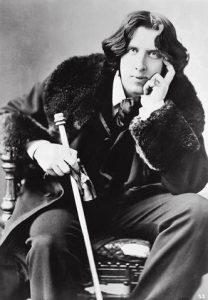
So why am I quoting some ancient author to talk about Kanye? I have to admit, quoting one of the most accomplished writers of the 19th century is quite unnecessary, but I chose to pull from this novel’s preface because it perfectly describes Yeezy’s music, and music in general these days.
If you have a basic sense of what’s currently going on in the world, then I’m sure you know what has happened to Kanye West, who now identifies as “Ye.” To those still clueless and unwilling to do a Google search, I’ll just say that he’s had a “fall from grace.” His career was always embroiled in controversy, but only in recent years has it reached such a polarizing level that basically everyone who associated with him has left the man to reap what he sowed.
And yet, despite how infamous he is right now, Ye’s music still charts. In fact, one song from 2007 recently crossed 1 billion streams on Spotify, 18 years after release.
If the guy’s this hated, how are his songs still so popular? Well, it’s ’cause you need to separate the art from the artist. Oscar Wilde was the subject of public scrutiny in the time after “The Picture of Dorian Gray” went into publication for having relationships deemed blasphemous and sinful at the time. He was later tried in court and convicted for gross indecency, a charge which led to his downfall from being Ireland’s most famous writer to rotting in a murky London prison.
Although he basically became a beggar in the final years of his life, he still stood up for himself; not for his nature of living, but for the merit of his art. He fought for the integrity of his work, saying that who he is as a person shouldn’t have to stain the value of his prose, as art provides a passage into an artist’s mind, not a window to peer into their house.
This same principle applies to art in general. Over the past few years, many celebrated works and their makers have come under scrutiny, primarily for the creators’ actions. Many believe that if a terrible person makes a terrific piece of art, then we must stop praising the latter and instead call it terrible, too.
This mindset is a flawed one, and it has the same energy as hindsight bias.
Art is something that’s been around for millennia; the first traces of human civilization date back to drawings on walls, and now we’ve evolved to make machines draw for us. What I’m saying is that we cannot devalue a work because of how we devalue its artist; the artist is always going through more than the public knows, but the fact that they decided to channel their time and power into making a piece of art is admirable already. And for that to go on and affect the lives of many others–that’s something else. Human life is on a timer; no one can live forever, but that’s why they create.
Those creations are timeless.
The man who made “My Beautiful Dark Twisted Fantasy” will live in infamy, as he hurt more than he healed. But the album he made before this descent has healed more people than it hurt.
And to that, let’s celebrate it turning 15 years old.
Sources:
(2024, January 5). Legacy and Lament: The Life and Works of Oscar Wilde as Told by his Son Vyvyan Holland – Scraps from the loft. Scraps from the Loft. https://scrapsfromtheloft.com/books/complete-works-of-oscar-wilde-vyvyan-holland-introduction/
Shipley, A., & Shipley, A. (2019, September 6). 20 Songs You Didn’t Know Kanye West Produced. Rolling Stone. https://www.rollingstone.com/music/music-lists/20-songs-you-didnt-know-kanye-west-produced-11859/