Hollywood, once a dominant force in the global movie industry, has been in its “flop era” lately, with all that is coming into theatres being reboots, sequels after sequels, and nostalgia-baiting adaptations. The not-so-sudden proliferation of these cash-grabbing movies has taken away the creativity and excitement that used to be a treasured part of enjoying films.
The focus for Hollywood right now is quantity over quality, meaning the quantity of the dollars their productions bring in, not the quality of the productions themselves. With companies like Disney churning out remakes and live-action adaptations of previous films, it’s become increasingly difficult for original movies to get some of the spotlight – or marketing budget.
A newly released 2025 Pixar movie, “Elio” just came out in theaters, but the box office reception and reviews were lukewarm. With the movie only netting $154.3 million worldwide on a $150 million budget, this original movie holds the unenviable title of being Pixar’s worst opening in history.
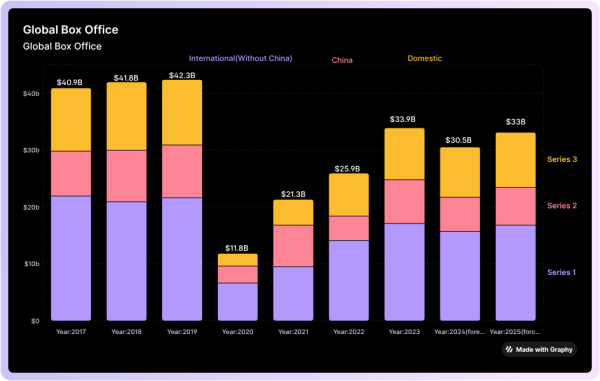
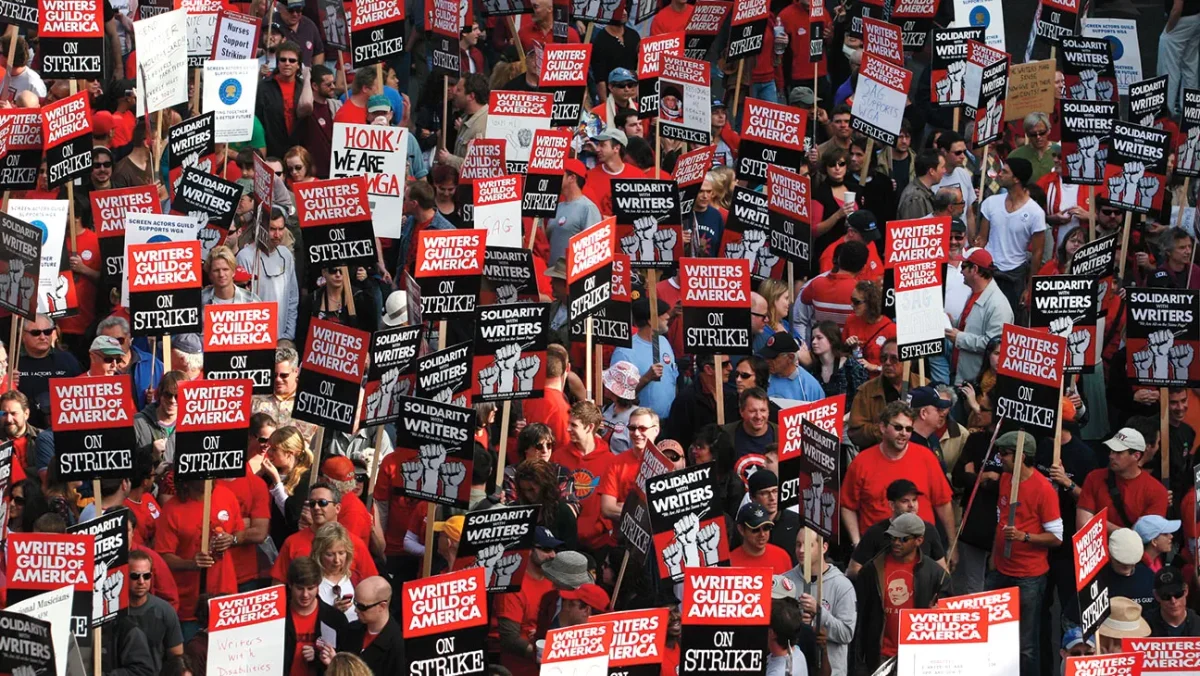
The spotlight instead goes to the continuations of other movies, like the 19 sequels released in 2025 alone, not even including November and December, where seven more are being released. This data really does show what kind of year Hollywood has been having, especially after the writer’s strike and losing the spark that good writers used to produce in movies.
This issue isn’t only reflected in box office numbers, though. It’s also seen in how people talk about movies online.
As the popular TikToker, Nicky at Night, captioned one of his videos: “We are in a recession of originality. It feels like everything is a remake of something else, and we barely get any new stories… literally all of their franchises are just leftovers from the things we were all watching 10-20 years ago.”
Disney has also been trying to please everyone, but these efforts have actually driven audiences away from some movies, like the new “Snow White” live action adaptation, which failed in every aspect a movie can fail. The film caused a multitude of controversies and problems, such as with actress Gal Gadot, who was cast as the Evil Queen, getting backlash for her amateur singing and bad acting skills.
The movie also received a lot of hate for changing the races of the characters. Though these attempts at inclusivity were well-intentioned, audiences argue that diversity would be more well-represented with new stories rather than altering the remakes.
In effect, all of this has left us watchers disengaged as we see the same predictable formula show up on our screens again and again. Movie-watchers at our school expressed how they too think the movies released this year have been incredibly mediocre.
“Most movies nowadays have been sequels and I haven’t seen an original movie in awhile,” said freshman Amelia Nassery.
But the problem doesn’t stop with the bad movies. Streaming platforms also massively impact how we watch movies in 2025. The constant disappointments are causing audiences to just stay home and wait for the next movie to come on their streaming site. These streaming sites like Netflix, Hulu, and Disney Plus have brought problems to the movie industry with an extreme amount of people watching movies in their homes, effecting a huge loss of revenue as they’re not purchasing theatre tickets at theatre prices.
While many have pointed to the cost of seeing a movie in theatres as driving away audiences, the quality of available films can’t be overlooked as a contributing factor.
Freshman Vincent Xiao said, “I don’t really go to the movies anymore because there’s nothing interesting this year.”
Disney movies like Marvel’s “Black Widow” had disappointing box office returns with Disney choosing to stream the movie on their app instead of promoting it as a movie that you can watch in theaters. Disney+ also had exclusive shows and movies that were only accessible on the site, leading to the watchers conveniently staying home and watching on their televisions.
Ultimately, audiences are tired of recycled plots and predictable sequels. If Hollywood wants to survive this historic slump, it needs to stop milking nostalgia and start investing in the one thing money and even artificial intelligence can’t buy or produce: creativity